Passenger Assistance
Designing an Accessible Booking Experience for 1M+ passenger That Scales Across Cultures
Overview
Company
Transreport
Product
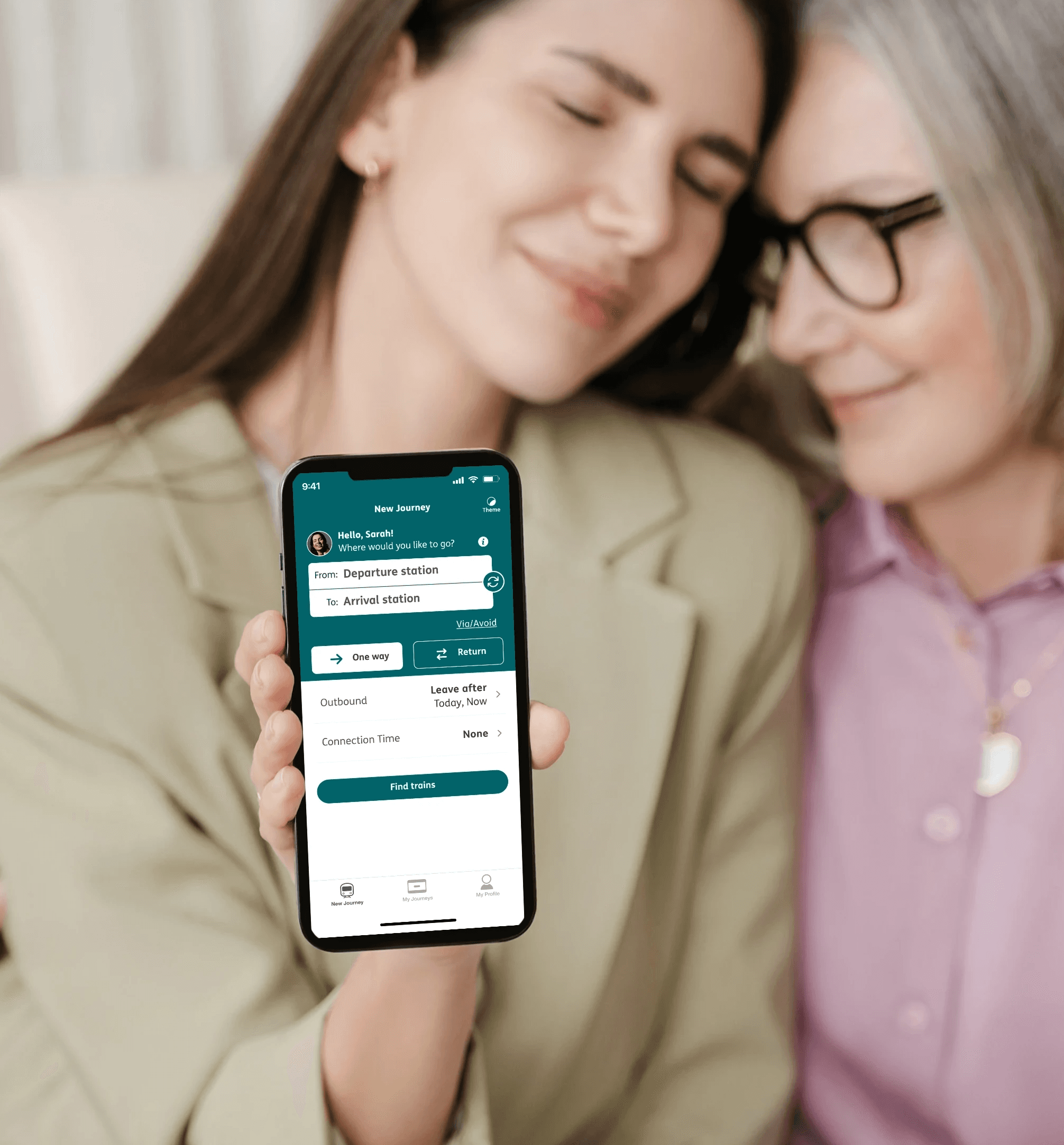
Passenger Assistance — B2B2C mobile app
Market
UK (Live) · Japan (Live)
My role
Senior Product Designer with other 2 product designers
Scope
Accessibility design · Cross-cultural UX · Localisation · Design system scalability · Product Strategy
Duration
May 2024- May 2025 Japan / Set 2024- Now UK
Overview
1M+passenger
8M+ Bookings /year
20+ train operators
4.8 star in apple store
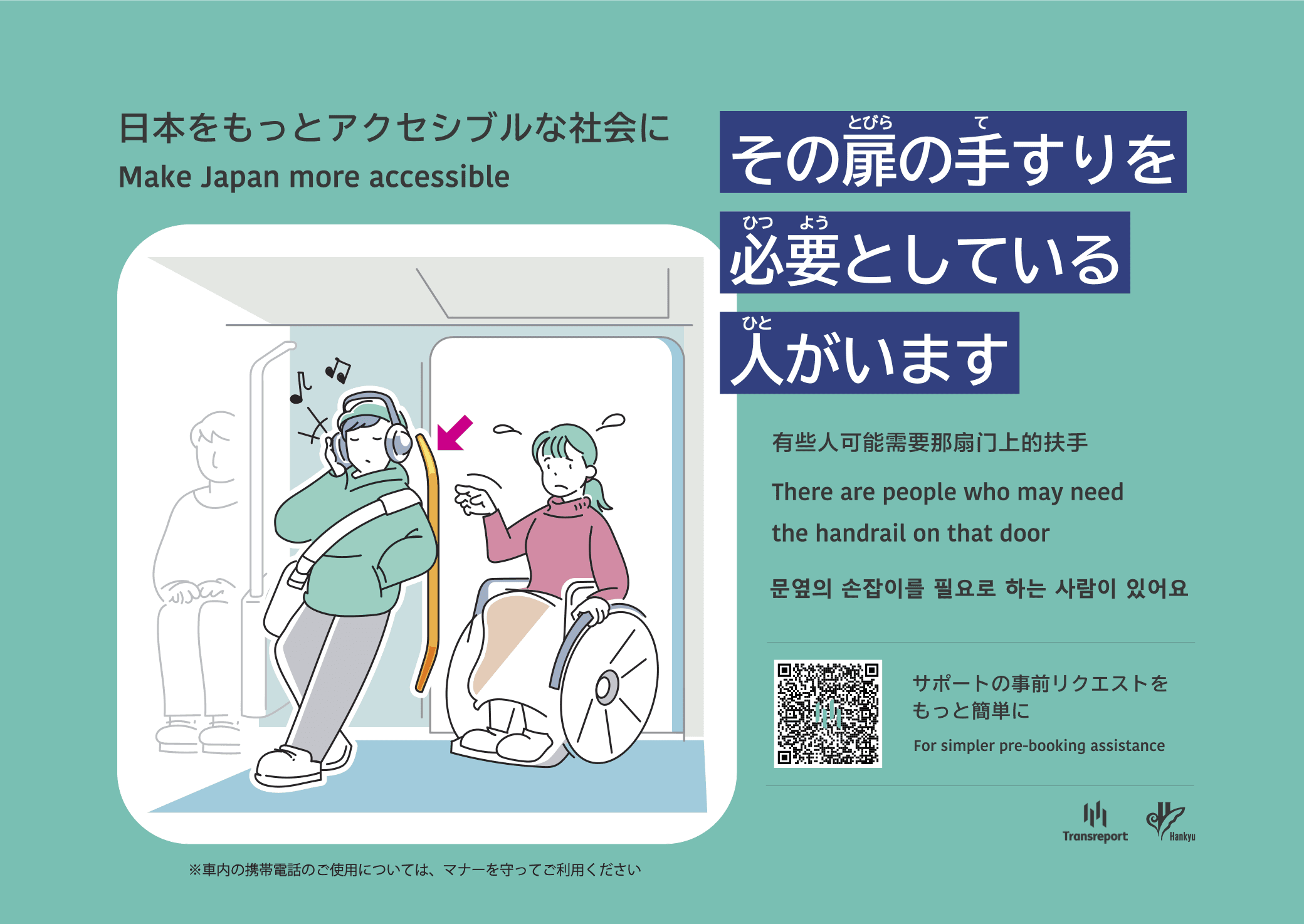
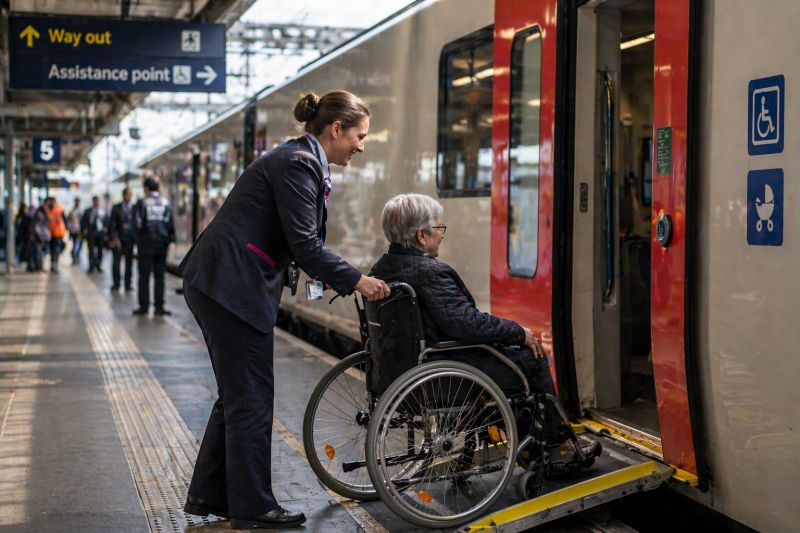
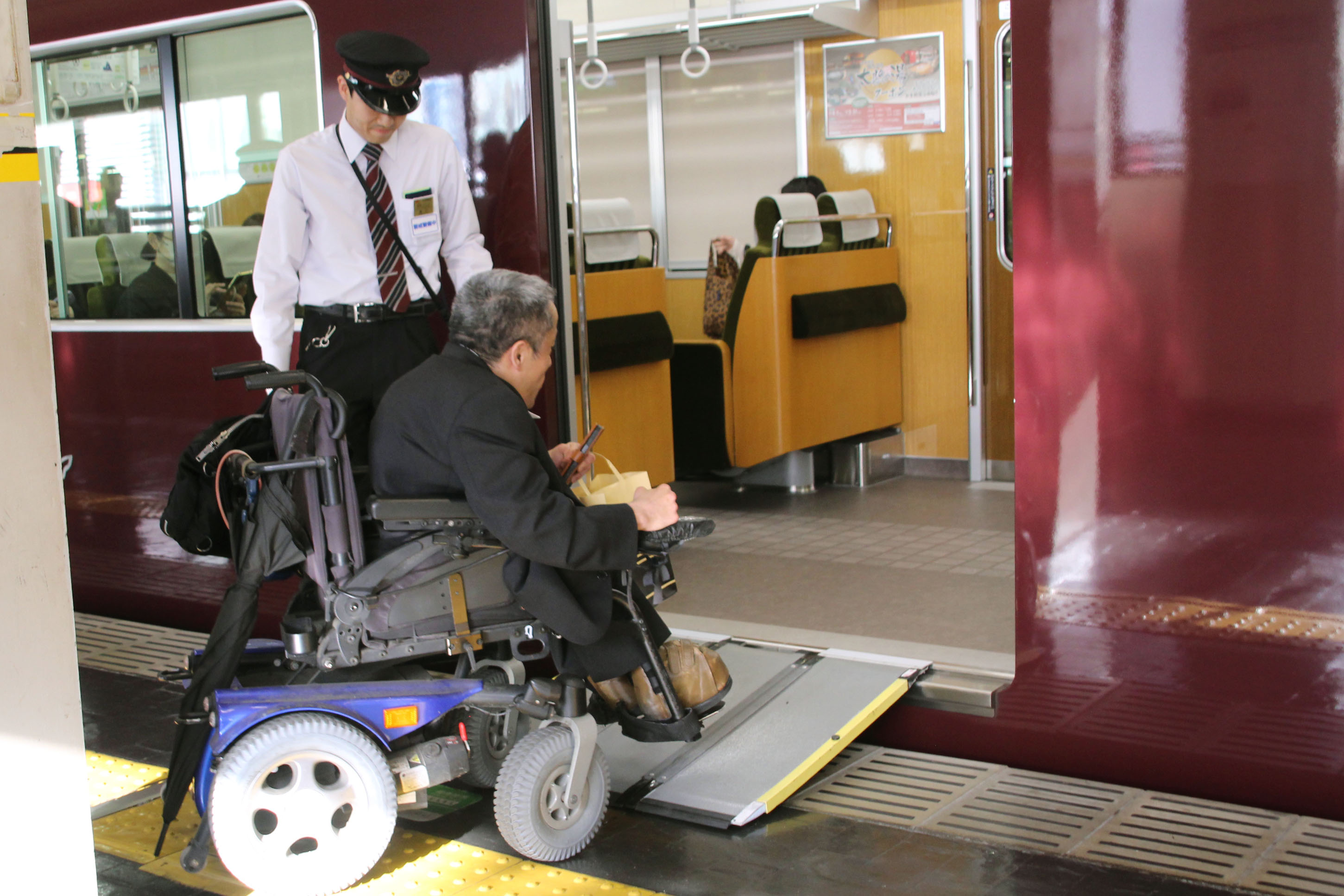
Launched in Japan with Hankyu Railway across 88 stations in 2025
The challenges
For the bussiness
Passenger Assistance sits in an unusual commercial position. The passenger app is free, as accessibility should be, which means it generates no direct revenue. Transreport's business runs on the staff-facing tools that train operators pay for.
This creates a strategic tension: every hour invested in the passenger app is an hour not spent on the products that pay the bills. And yet the passenger app is the foundation the entire business sits on. Without passenger trust, there are no bookings. Without bookings, operators have no need for the staff tools.
The brief I was given was narrow: iterate the passenger app, expand into Japan. The brief I took on was wider — prove that investment in passenger experience wasn't a cost, but the thing holding the commercial model up.
For the product
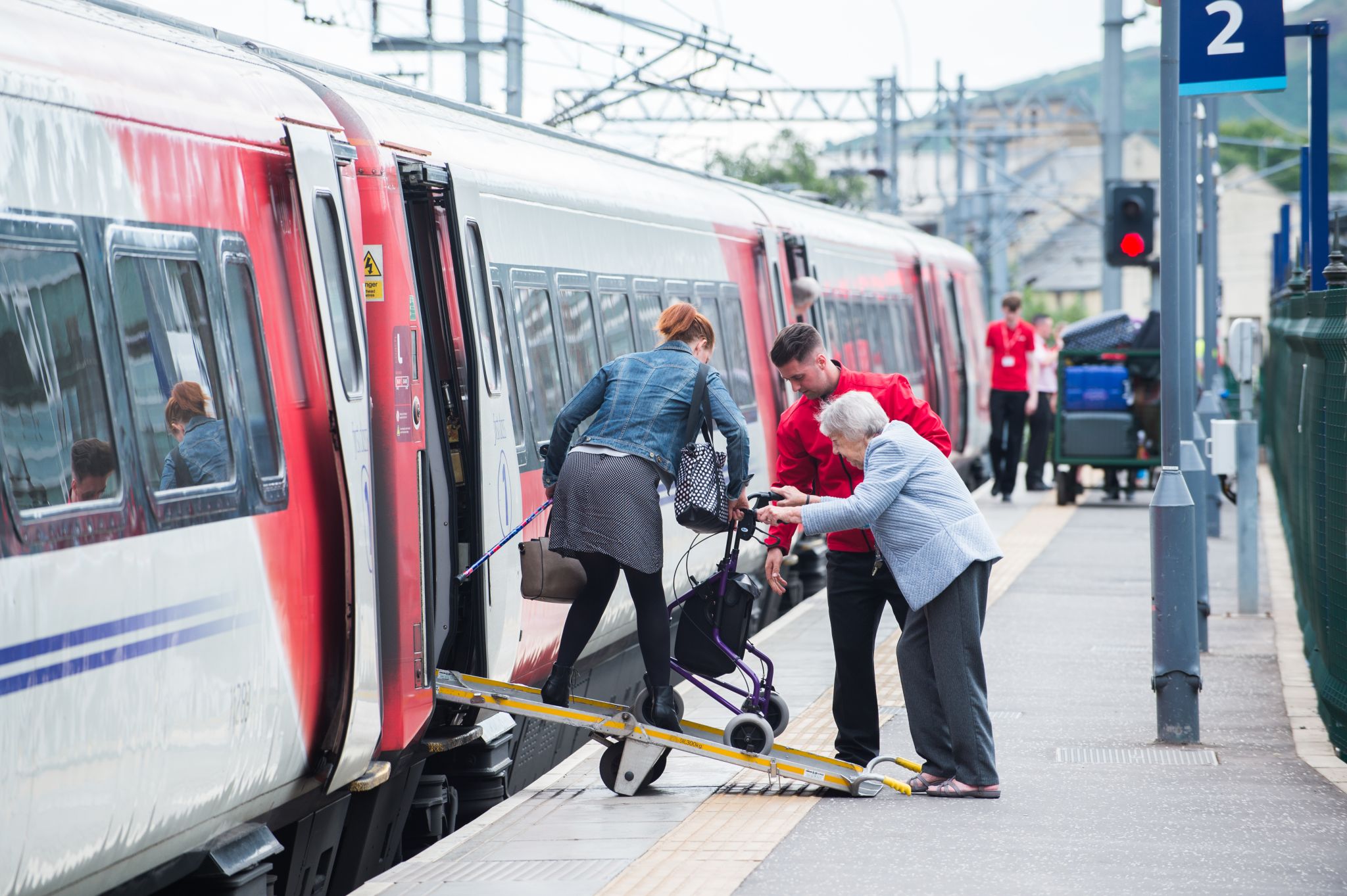
For most passengers, booking a train journey is a moment of closure. You buy the ticket, the journey is handled, and you can stop thinking about it until you need to travel.
For disabled passengers, that closure never arrives.
Process-wise, the service works. Passengers book assistance, operators receive the request, staff are dispatched, journeys happen. The product functions.
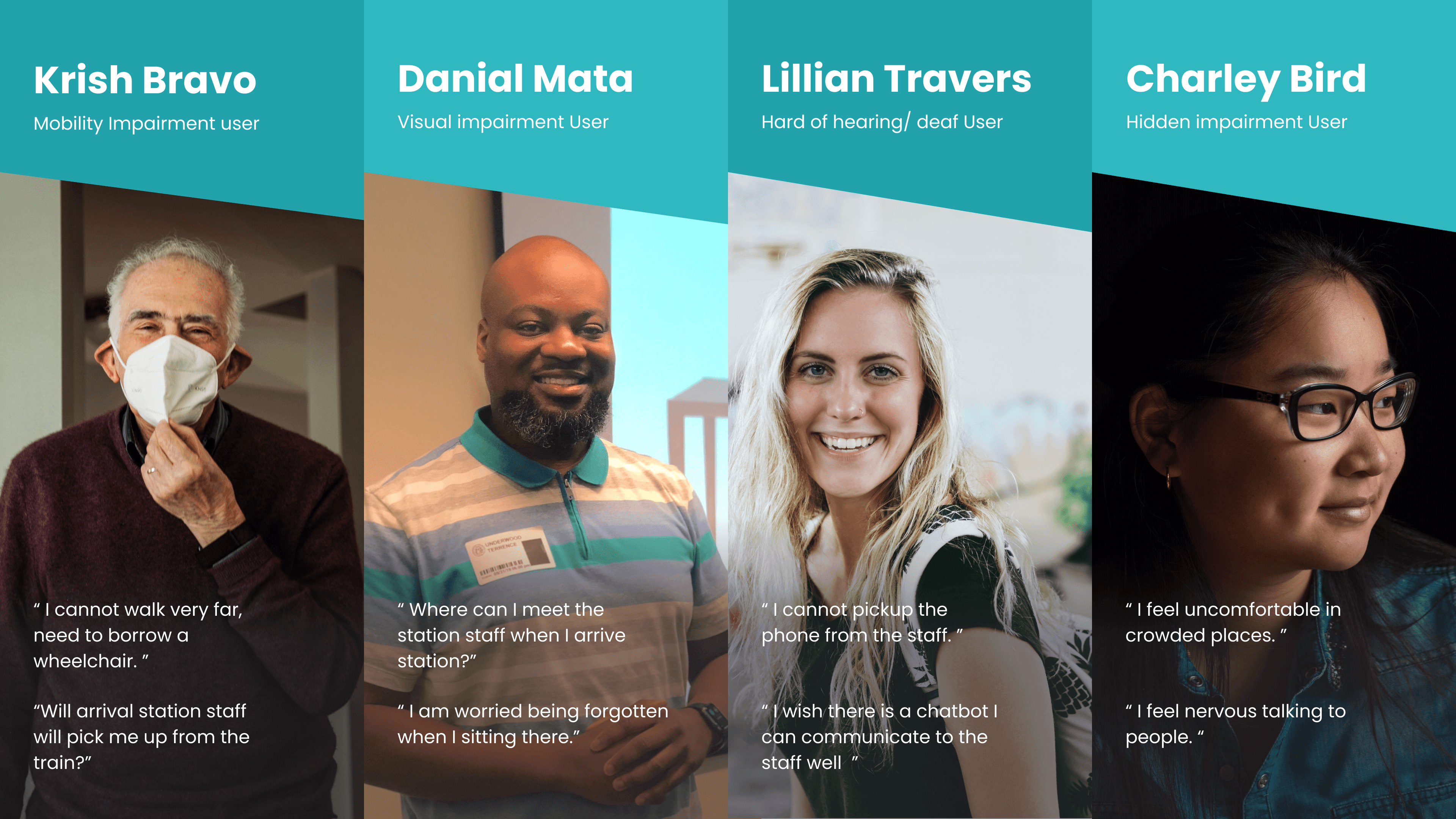
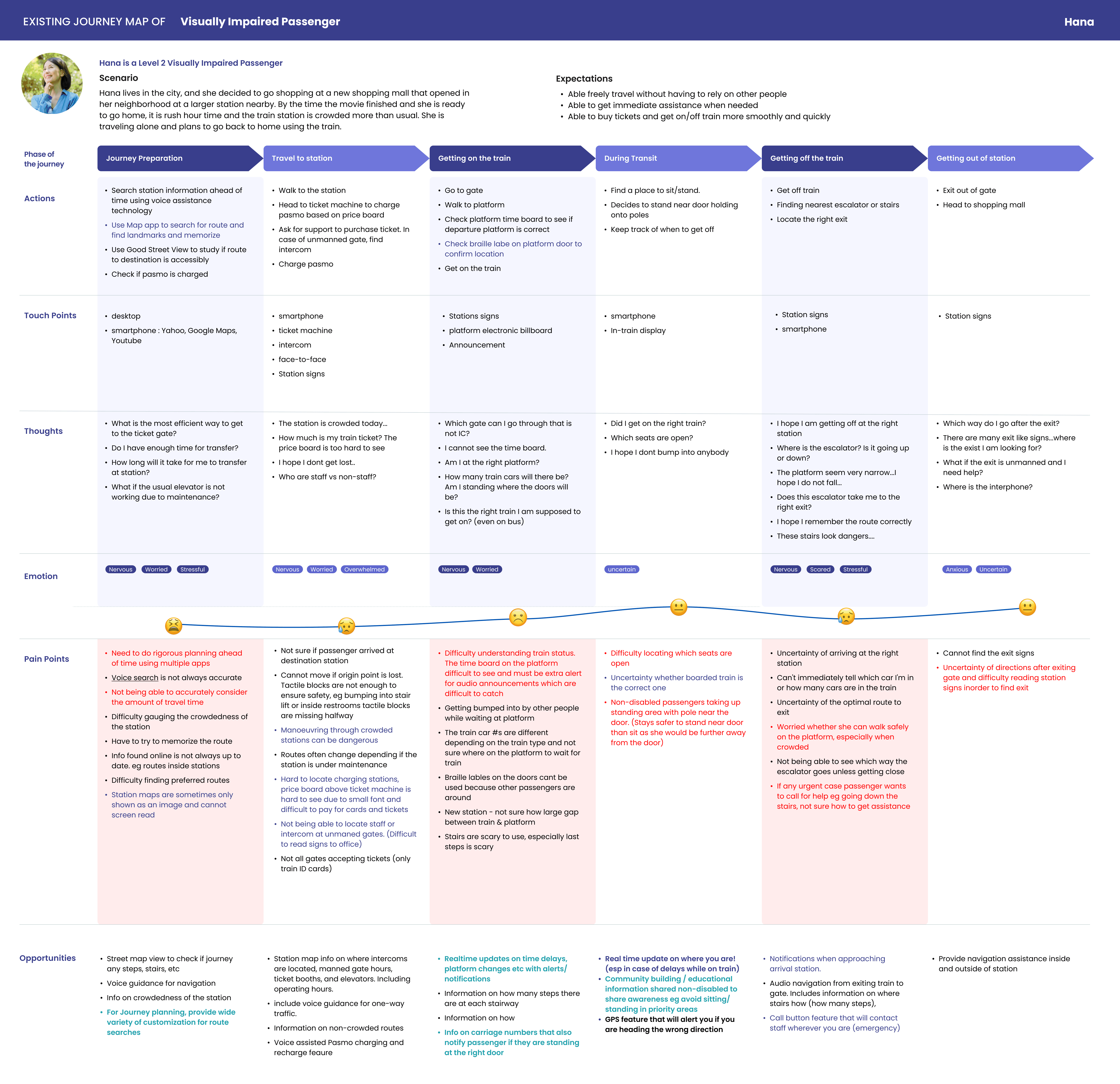
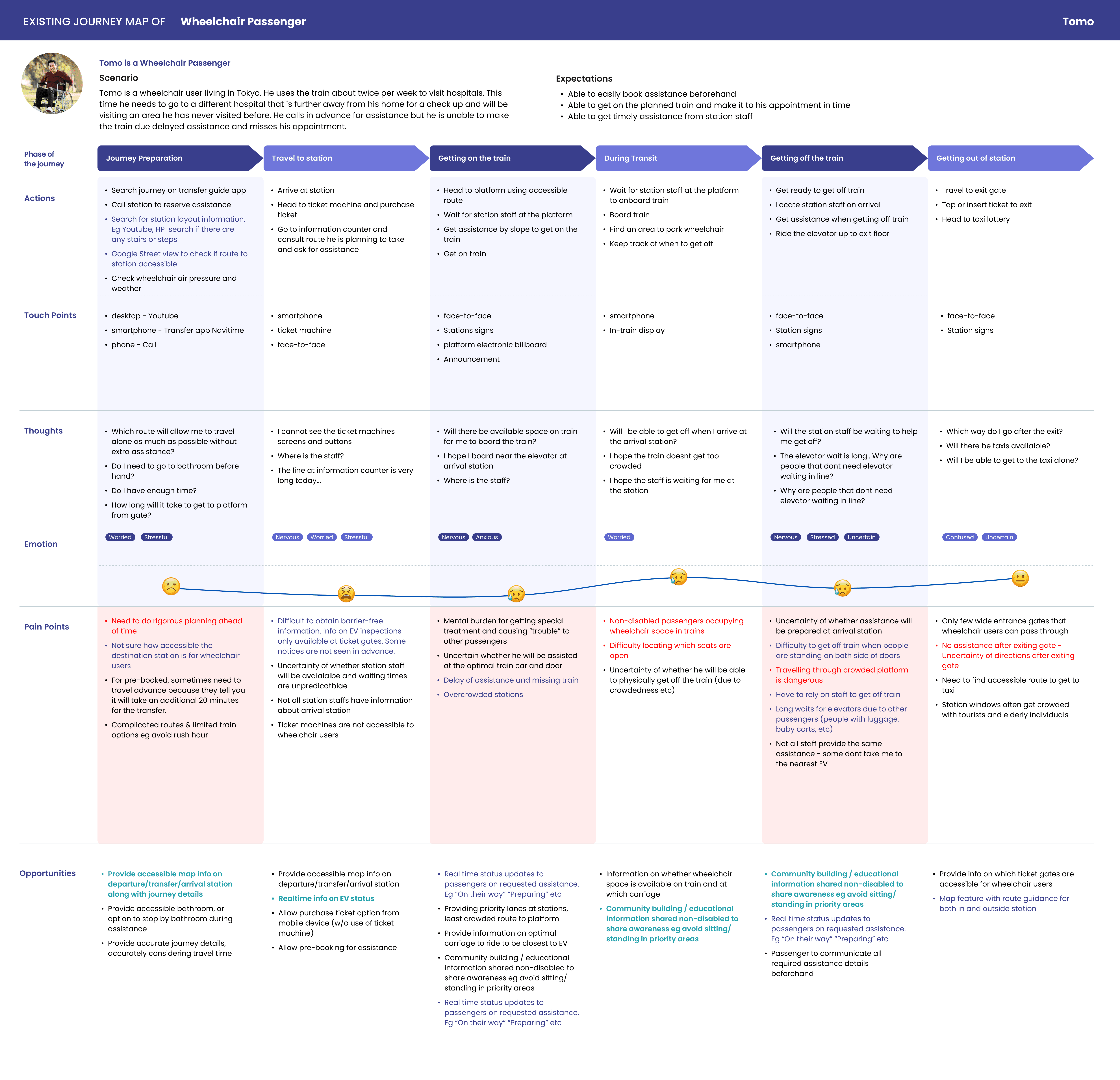
But travelling alongside passengers and shadowing their journeys end-to-end told a different story. The booking didn't end the mental work: Will the staff actually show up? Will they know what I need without me having to explain again? What happens at the interchange? What if the train is cancelled? What if I'm left on a platform I don't know, at 9pm?
The anxiety wasn't located at one point in the journey. It was the baseline hum underneath the entire experience — a continuous cognitive load of planning around a system that might fail them. Non-disabled passengers get to stop thinking once they've booked. Disabled passengers never do.
That gap — between a product that functions and a service that feels trustworthy — is where this project lived.
The Goal
This project carried two outcomes in parallel:
Build a service passengers could trust. Move the UK product beyond a functional booking tool into something that actively reduced the cognitive load disabled passengers were carrying — a service that felt reliable at every point in the journey, not just at the point of booking.
Build a product that could scale beyond the UK. Design the Japan launch not as a one-off localisation, but as the first test of whether the underlying model could hold up in a completely different service culture — and lay foundations the product could expand on internationally.
One outcome was about going deeper. The other was about going wider. The project only succeeded if we did both.
RESEARCH AND UNDERSTAZNDING
United Kingdom — diagnostic research on a mature product
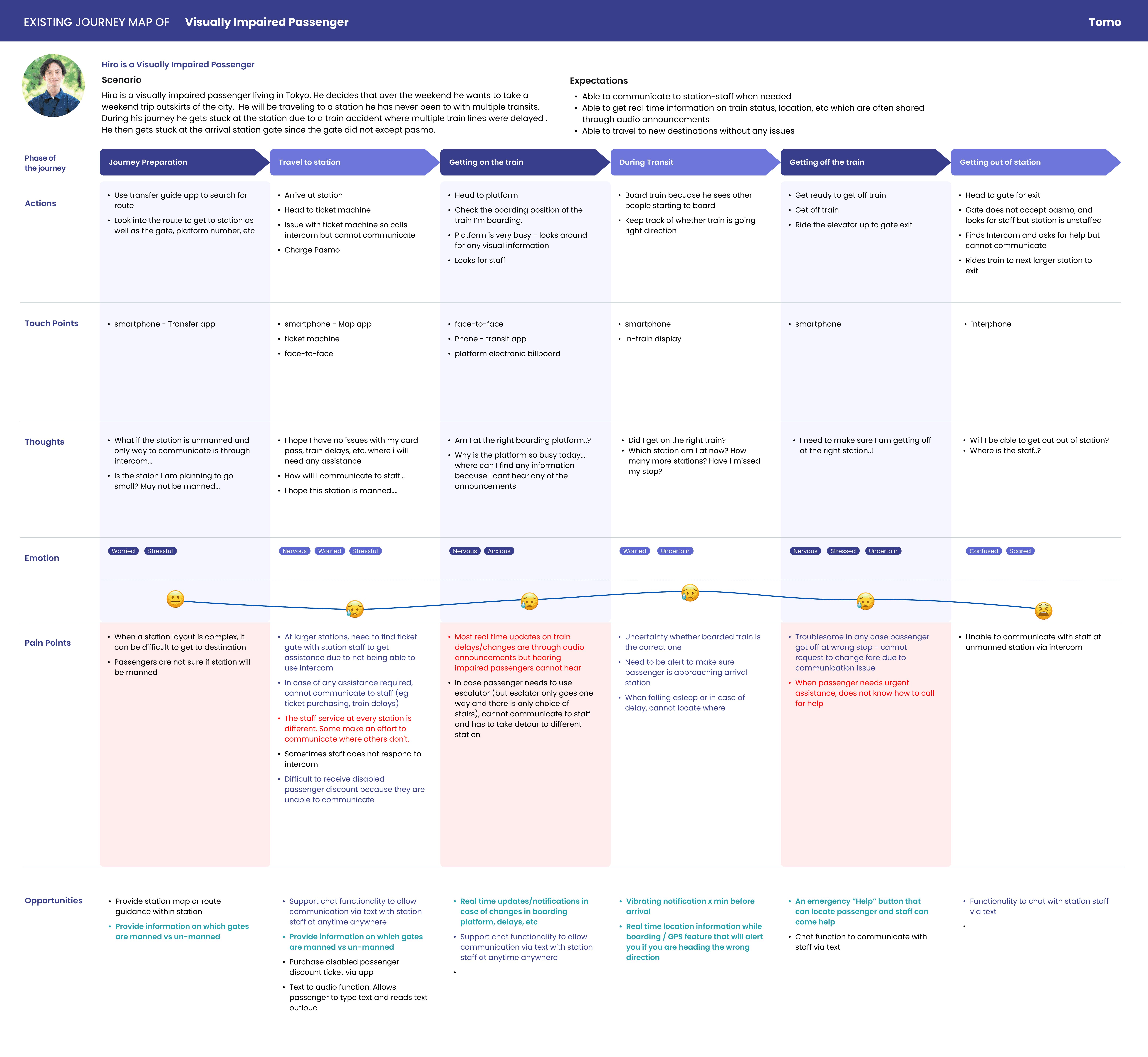
The UK research began with usability — friction in the booking flow, pain points in the assistance request process. But watching what users did with the product quickly gave way to watching what happened to their journey as a whole.
What emerged wasn't a feature problem. It was a communication and continuity problem — passengers lost confidence not at the point of booking, but in the silence that followed: from confirmation to platform, from platform to destination. The anxiety wasn't a moment. It was the entire journey.
The sessions revealed something consistent: people weren't frustrated by the process. They were exhausted by the mental labour of planning around a system they couldn't be certain would hold.
"There was no one there to basically put me on the, the train, basically. And I was like, what the heck do I do? Because I've missed the connection" — Research participant, UK
Accessibility Design
Designing for accessibility raises the floor for everyone. The clarity, structure, and feedback loops we built for users with mobility, cognitive, and visual impairments made the experience less stressful for all passengers. There's no tradeoff — accessibility done properly is just good design.
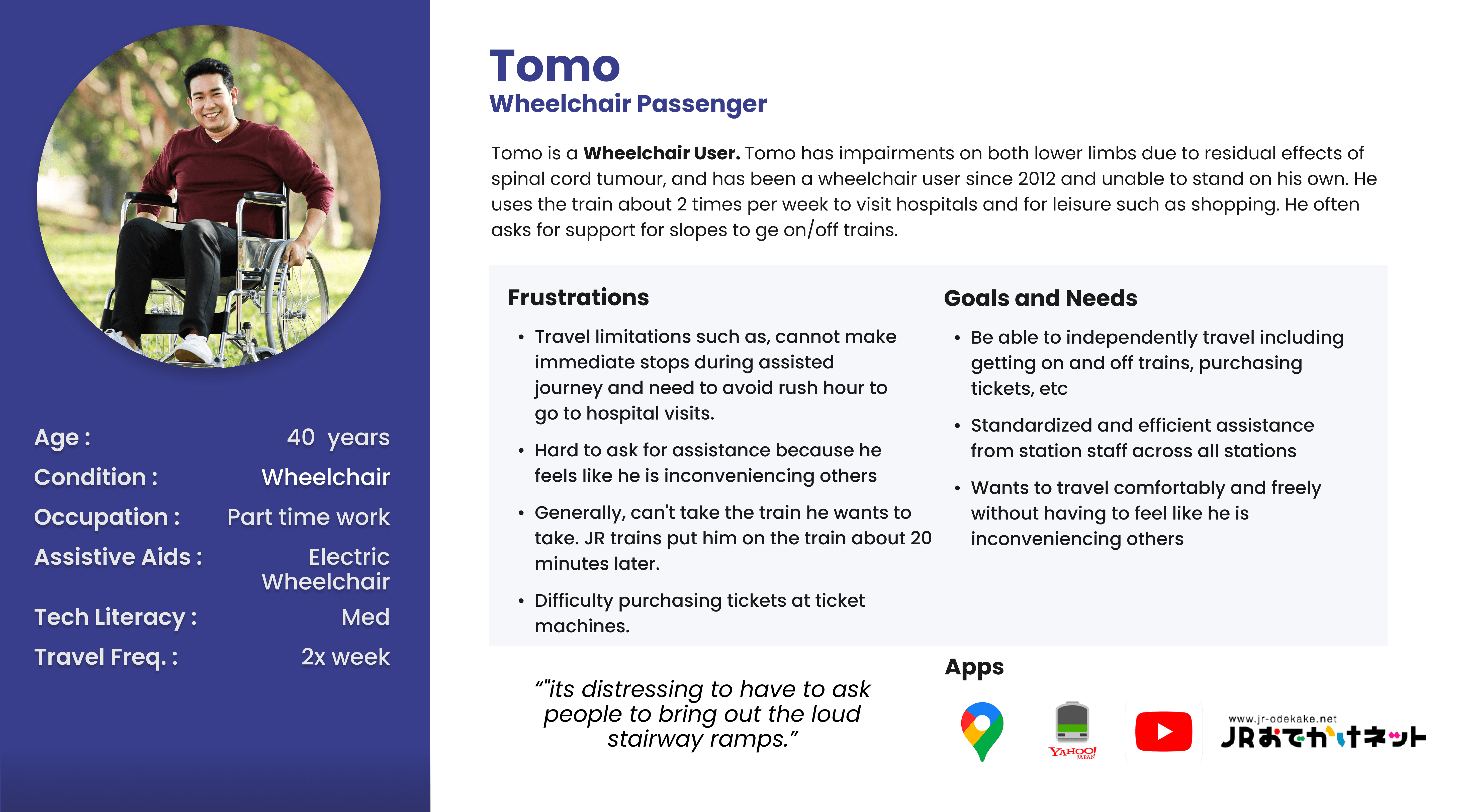
In the UK, the majority of registered users were wheelchair users. There was an implicit pull to design primarily for that group. I pushed back on that framing — accessibility should be the foundation of the product, not a feature layered on top for the most visible user group.
That decision had measurable outcomes. Blind and low-vision users — who had historically been underserved by the product — responded strongly, with accessibility consistently cited in positive reviews. When we launched in Japan, Hankyu Railway noted our approach to accessibility as a differentiating factor in why the model could work in their market.
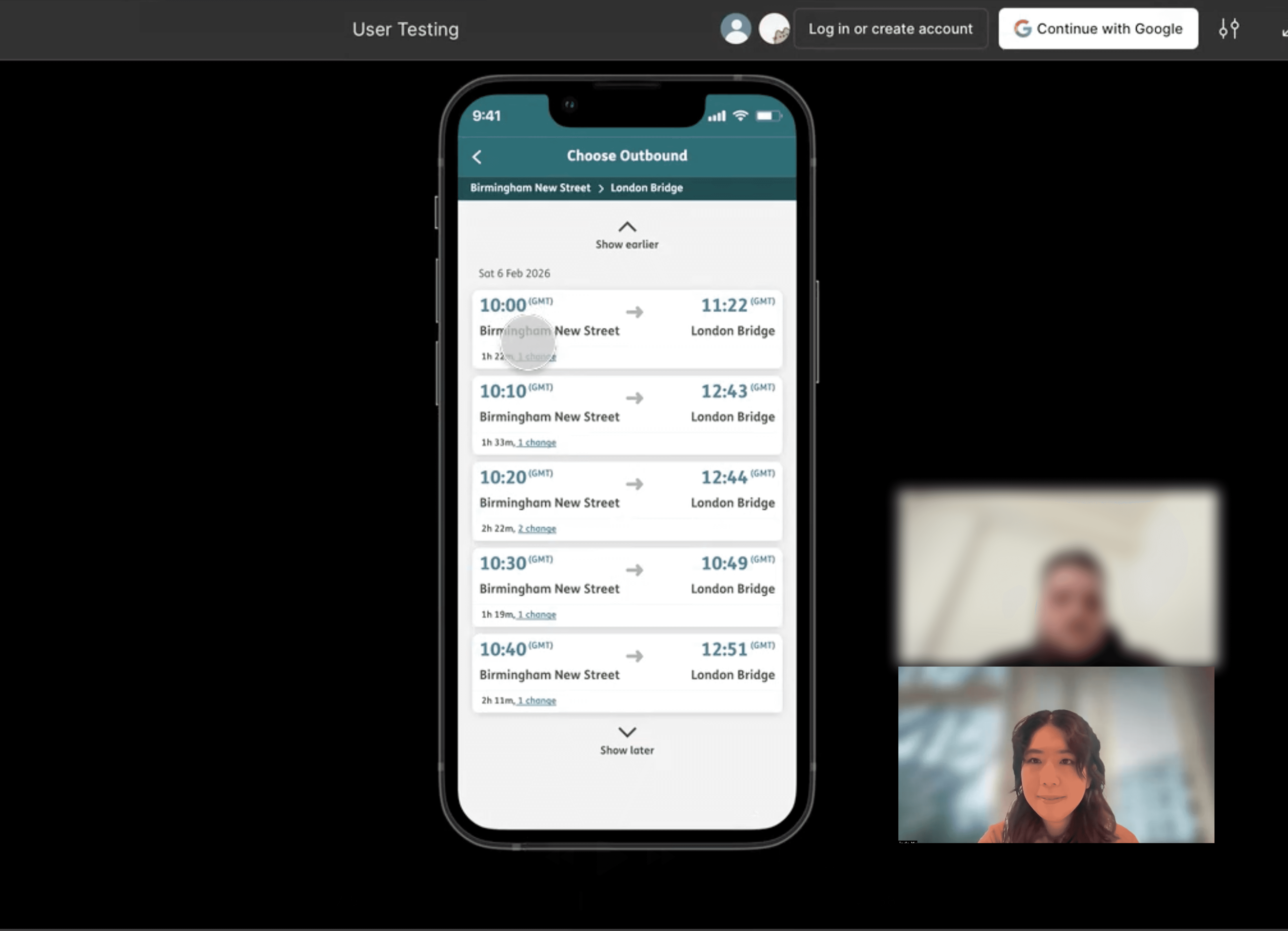
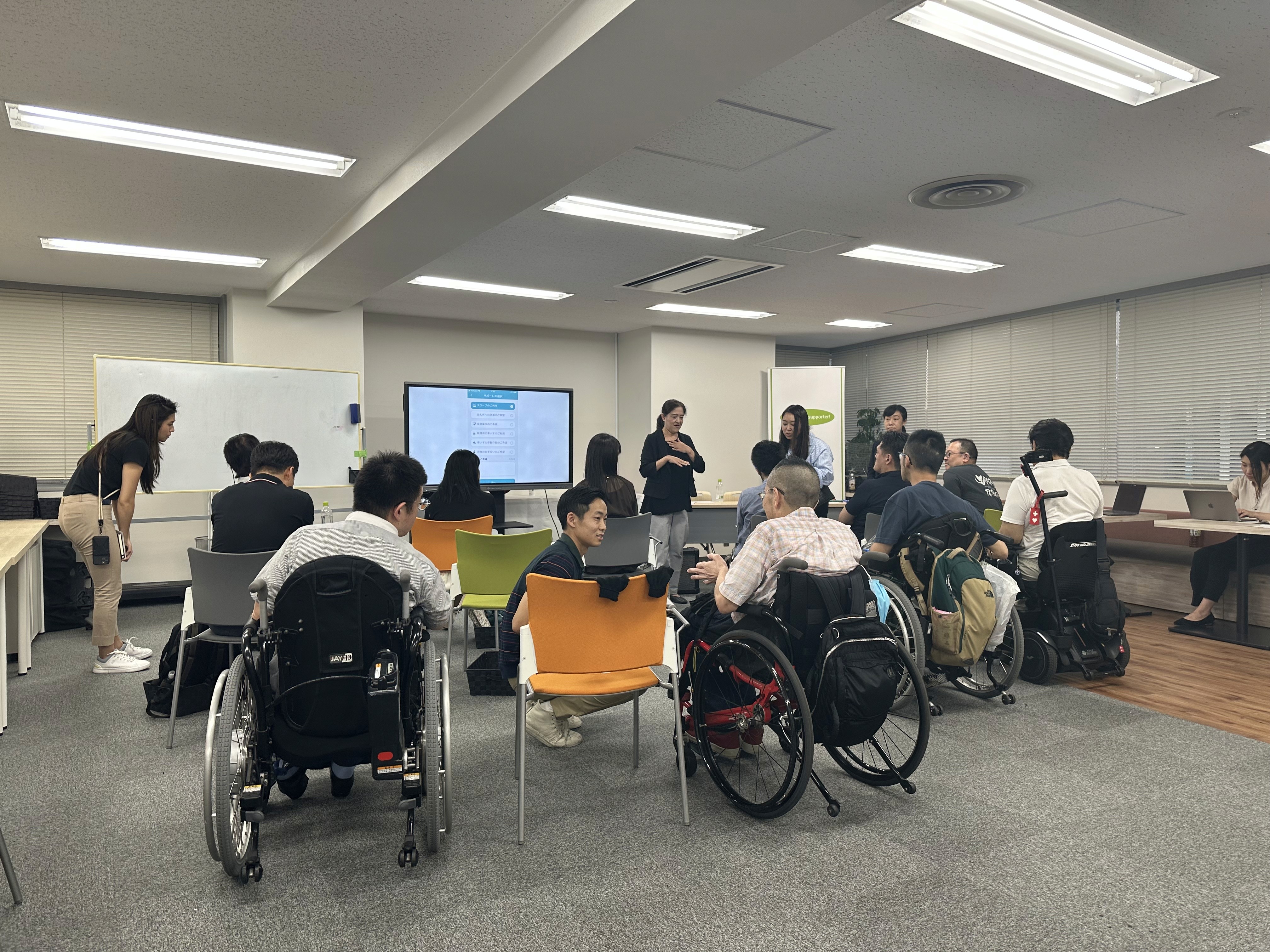
In Japan, I shaped the product roadmap with accessibility built in from day one — not retrofitted after the core flows were designed. Screen reader testing began in the earliest rounds of user research, not as a final QA check.
That sequencing changed what we learned. Issues we would have caught late — or missed entirely — surfaced early enough to influence core design decisions. Assuming something works and watching someone use it are two very different things.
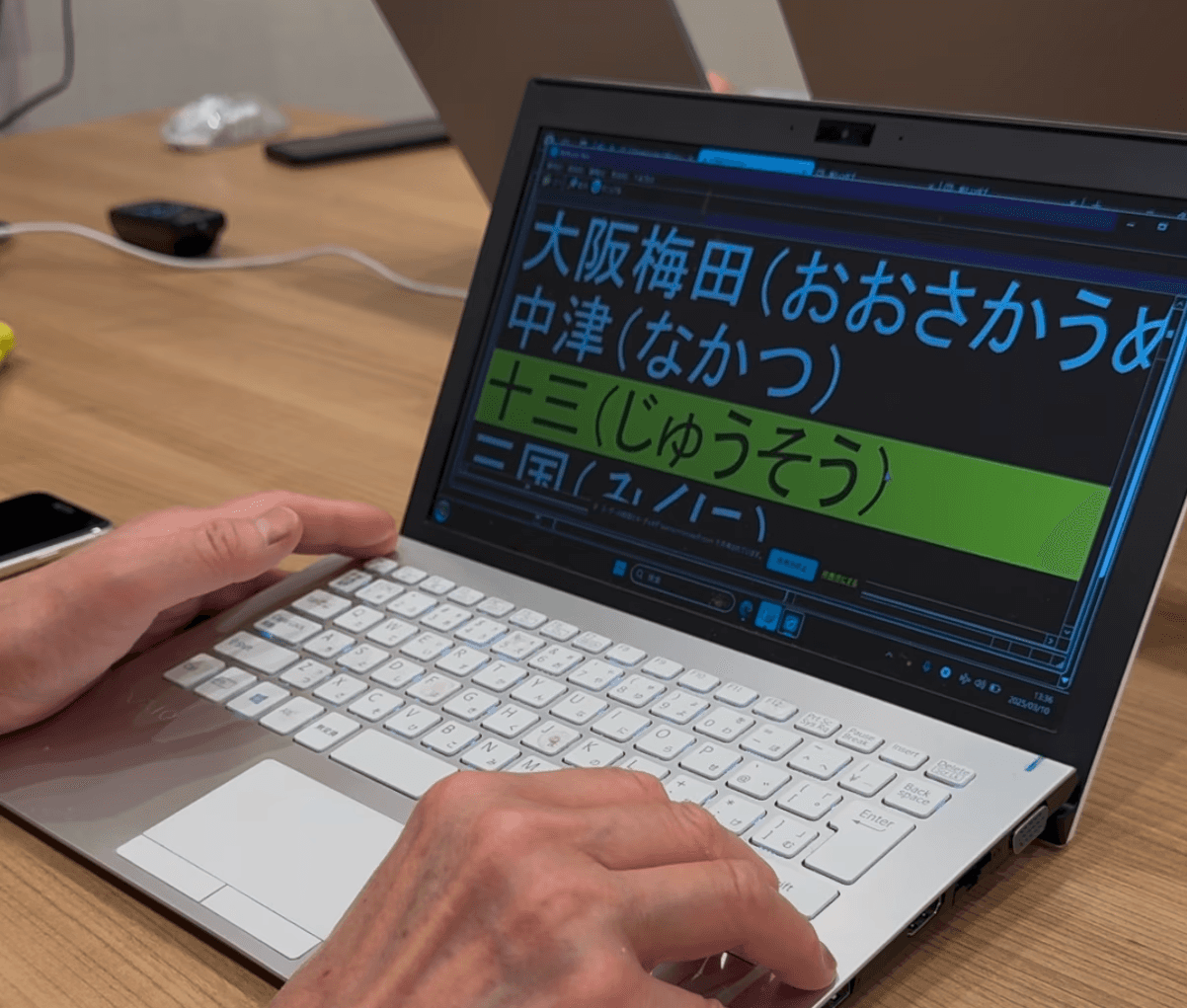

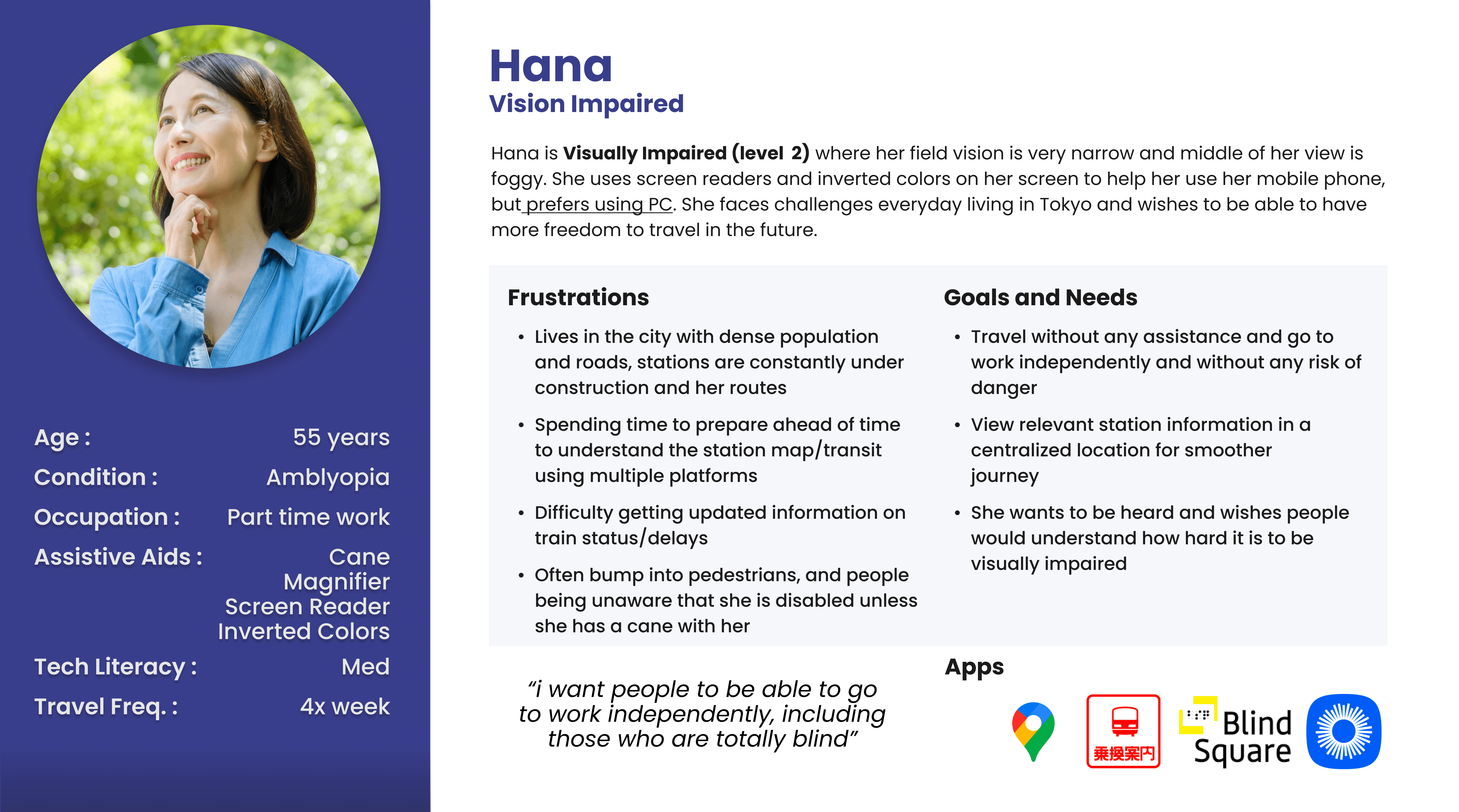
The testing results were valuable for the whole team. Observing and interviewing blind and low-vision users surfaced accessibility issues with screen reader support that none of us — as sighted, non-screen-reader users — would have caught on our own.
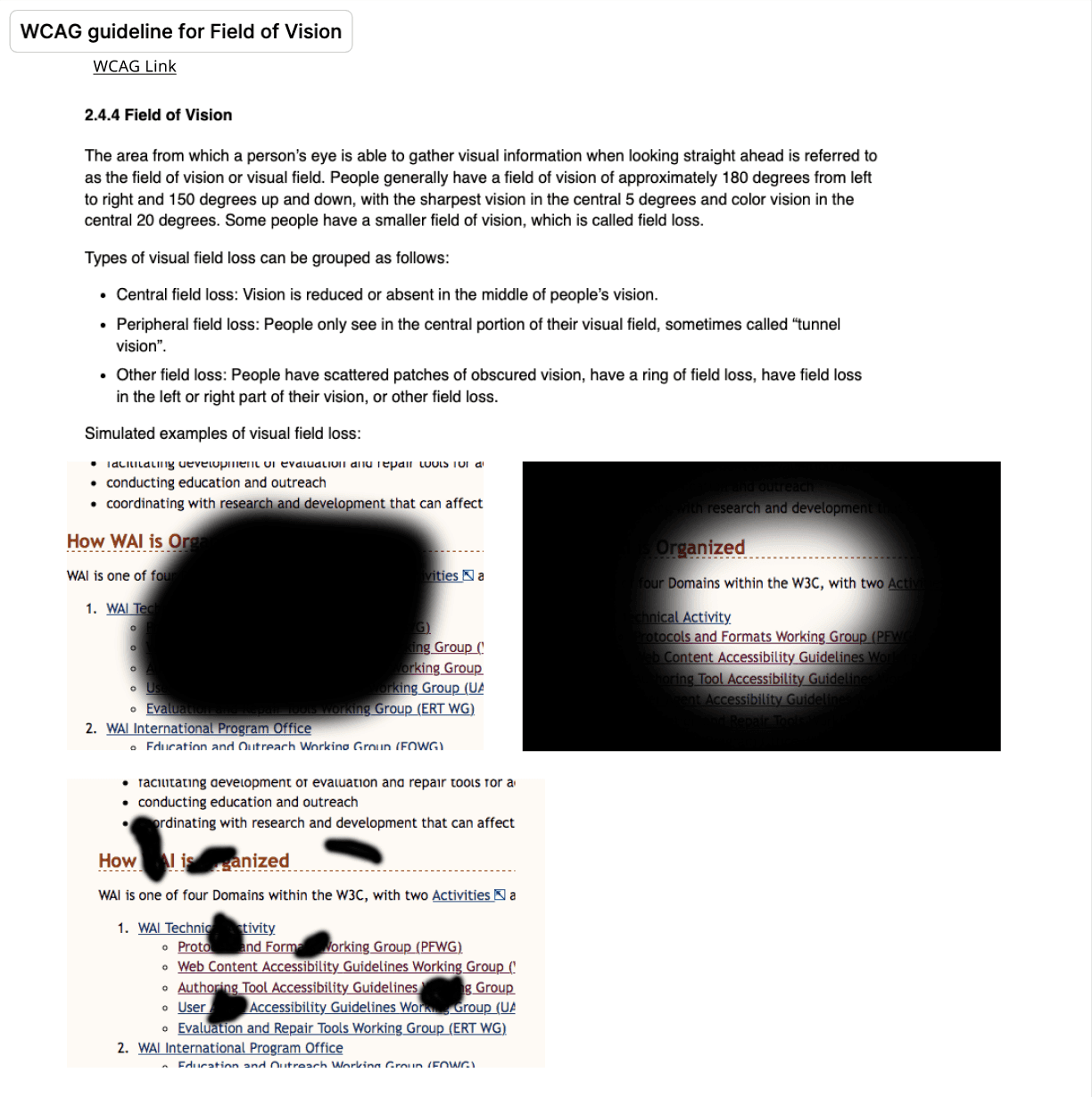
Two things stood out. First, keyboard and screen reader navigation follows a different logic to visual interaction — we needed to design for that sequence deliberately, not assume visual hierarchy would translate. Second, users with low vision experience the interface one small area at a time — a detail that reshaped how we thought about focus states, content density, and progressive disclosure across many screens.
UK Iteration
Based on the interviews, all the research across UK and Japan.
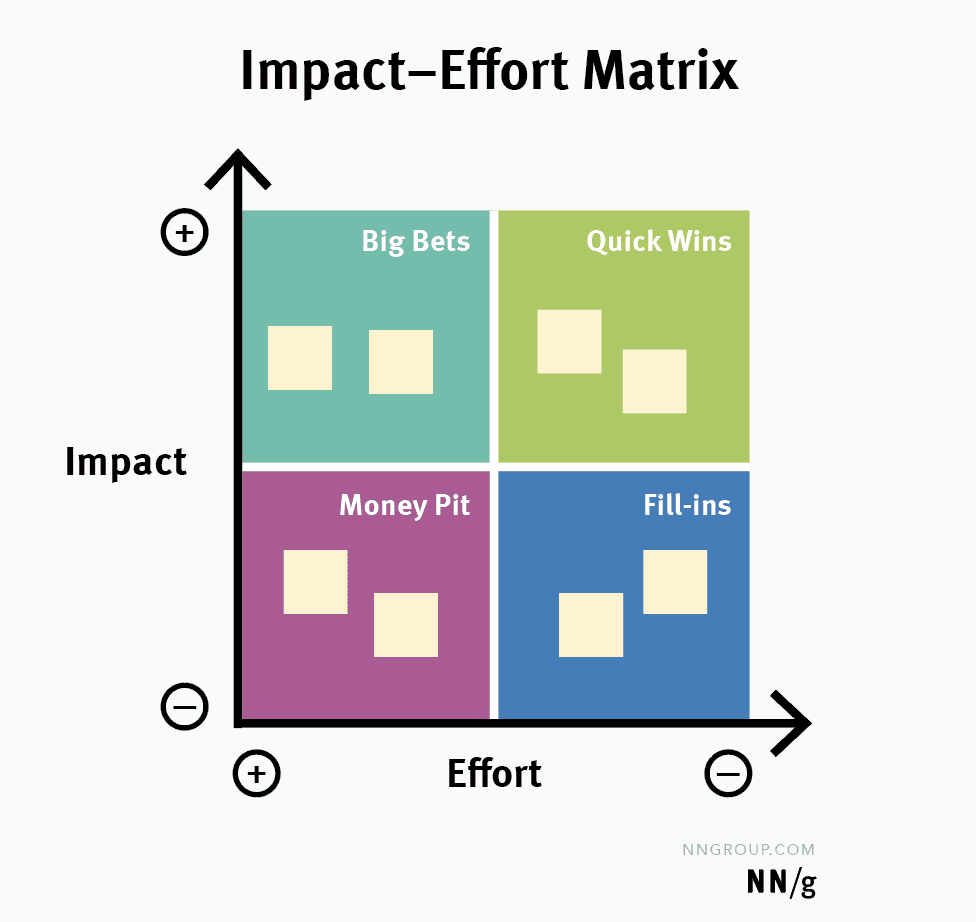
I introduce Impact–Effort Matrix to prosistise the feature we can build, with resources constrains and no direct profit.
- Content Copy
-Meeting point
-Introduce new feature popup
-I'm here
1 M+
4.8
1B
Landing in Japan
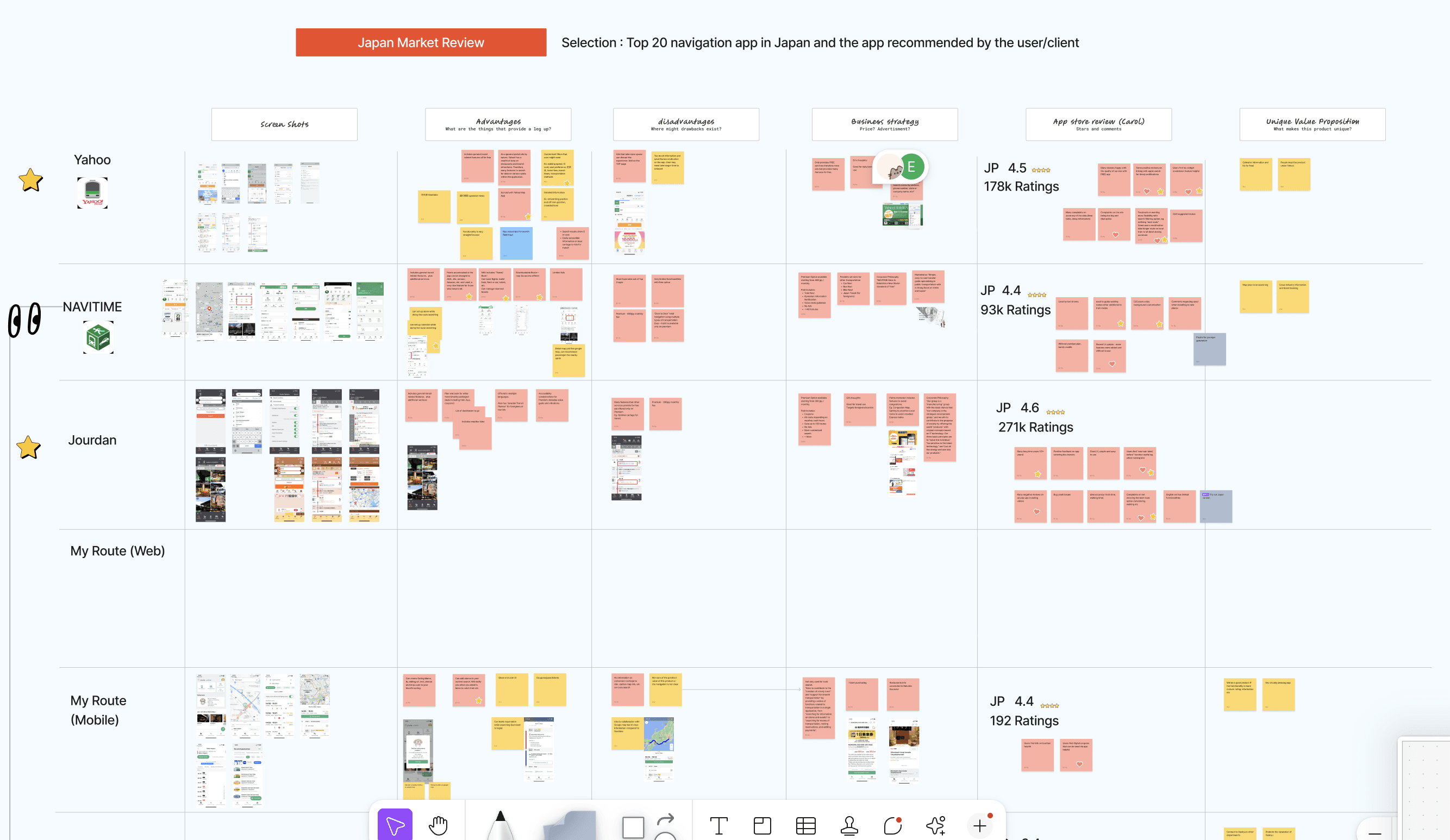
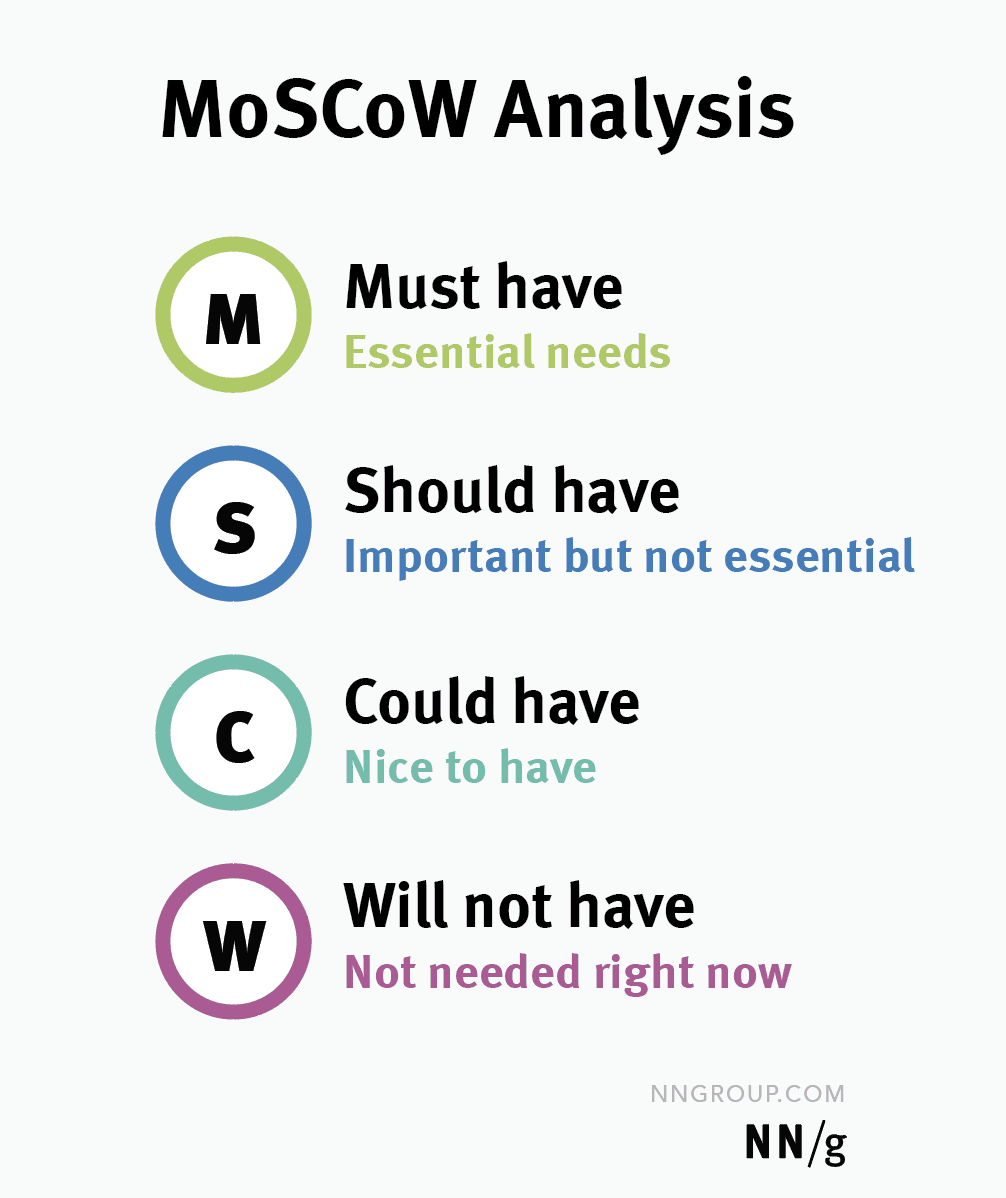
For Japan is a MVP design, We need control our effort to test the water. I used MoSCoW Analysis to decide what to od. I collaborate with Tech managers and account manager to plan out the release plan also schedule in some user bility test.
- Onboarding
-Meeting point
-Introduce new feature popup
-I'm here
88
105%
3.6
100%
Future Vision
With UK and Japan live, the question shifts from whether this product can work to what it should become. A vision workshop with the SVP of Product and product owner set the direction: Passenger Assistance should move from a booking tool to a journey companion — holding the passenger's confidence from intent to arrival, across any travel method in the world.
Three horizons
The next 12 months are about depth, not width — closing the post-booking gap the research surfaced: real-time staff status, interchange handovers, and disruption recovery. These are the moments anxiety actually lives in.
12–24 months means one deliberate new market. Not chosen for size, but for contrast — a European operator or Australian network that stresses the platform differently and proves the model is repeatable without me running every launch.
24–36 months is the longer-term position: Passenger Assistance as infrastructure — the accessibility layer passengers expect underneath any rail journey, the way mapping sits underneath navigation. That requires operator interoperability, a portable passenger accessibility profile, and a service standard the product can hold operators to.
What I'd argue against
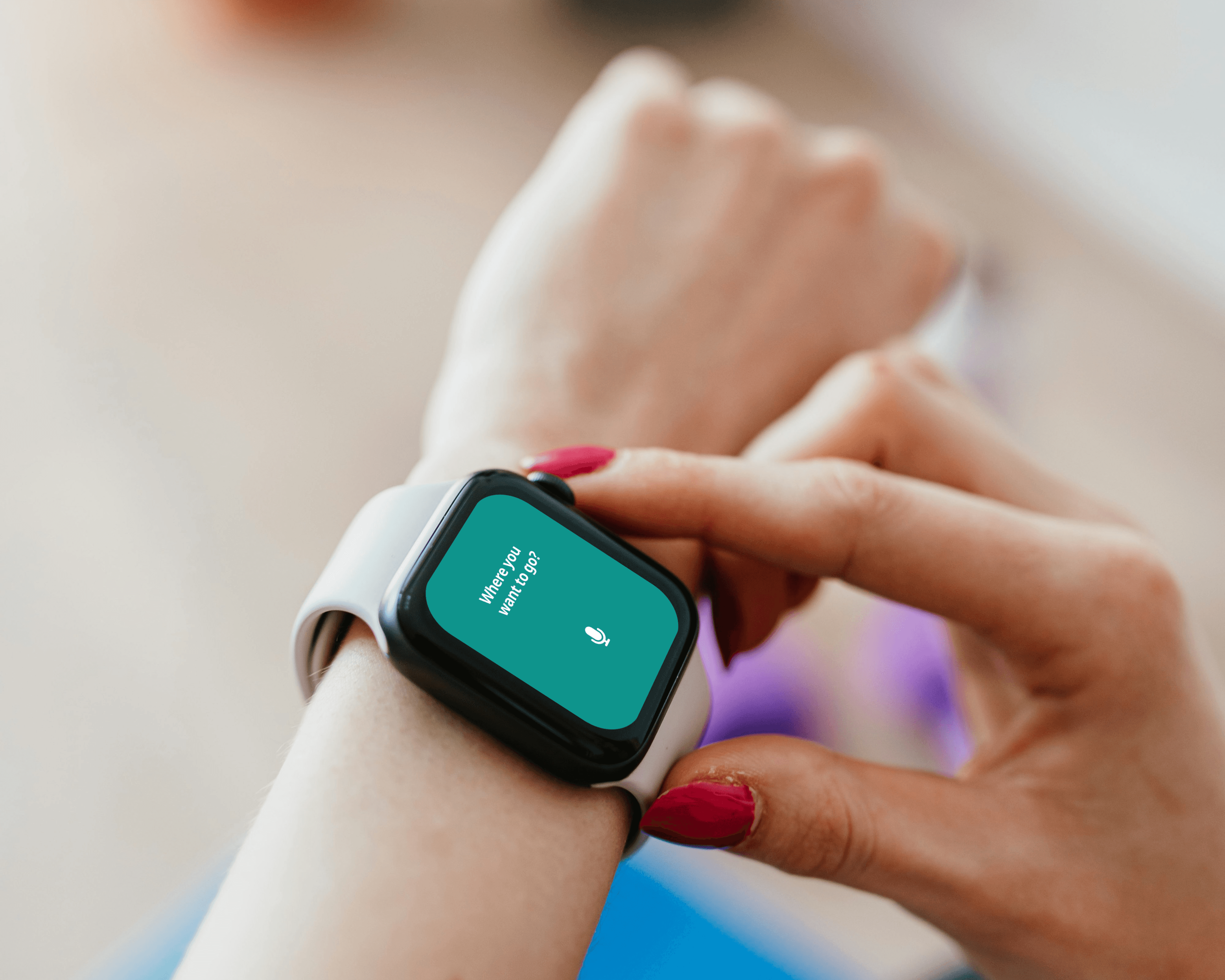
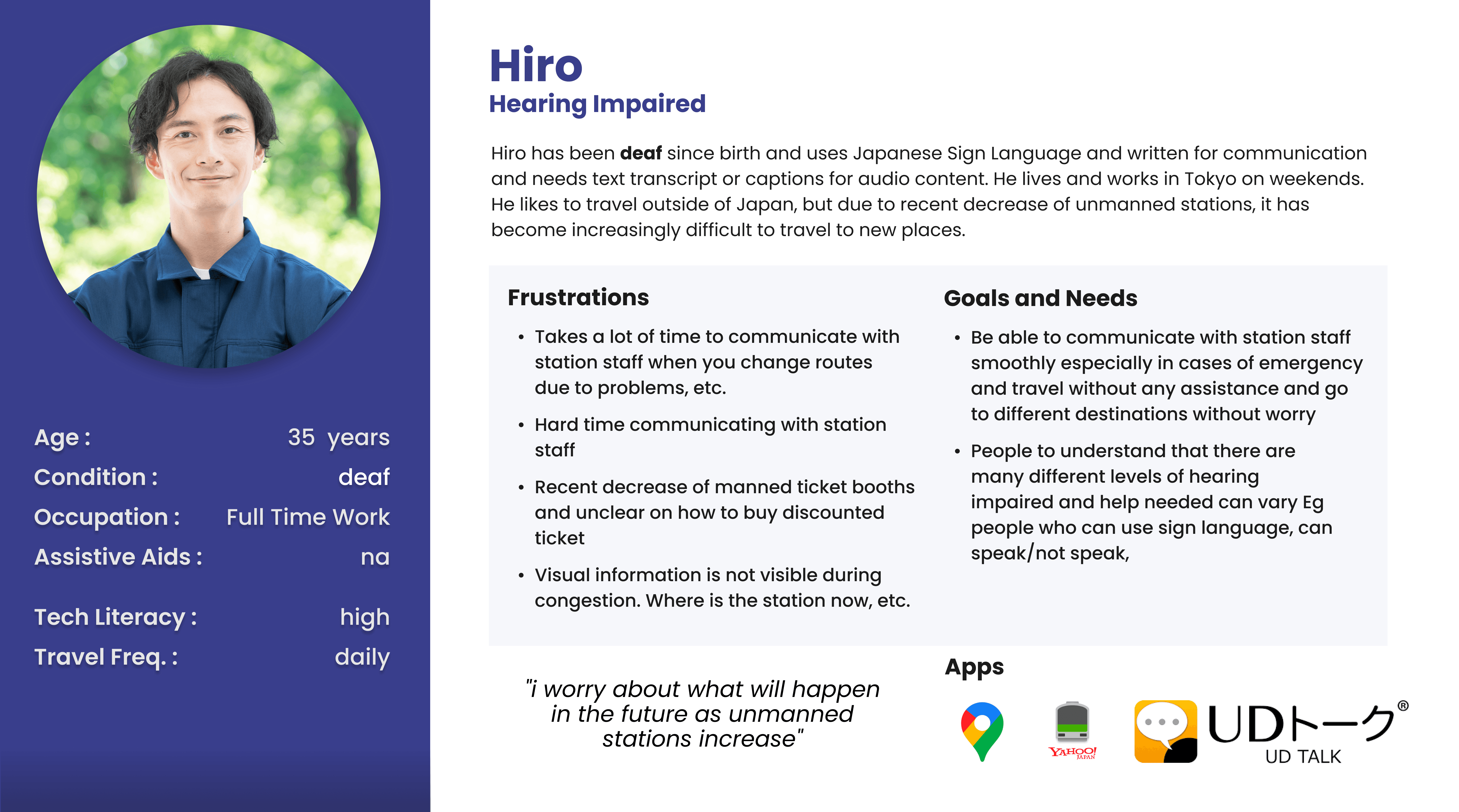
A consumer-style AI chatbot as the primary surface — our research shows disabled passengers want predictable, screen-reader-friendly interfaces over conversational ones. AI belongs underneath the product, not on top of it. And wearable-first features before the journey-companion layer is mature — the bottleneck is confidence, not glanceability.
What this means for design
The work ahead is less about new screens and more about turning the component system, research framework, and universal-design principles into a platform other designers can build on — in other markets, without me in the room.
Reflection
With the UK and Japan markets live and validated, Transreport's roadmap points toward broader global expansion. The design foundations are in place: a component system built for localisation, research frameworks for new market entry, and a product philosophy grounded in universal design principles that translate across cultures.
The vision is a world where a disabled passenger — anywhere — can book rail assistance with the same confidence, clarity, and control.